
How does a clutch work on a go kart? In this article, we delve into the mechanics of a go-kart clutch, demystifying the workings of these intricate devices.
From understanding the fundamental purpose of a go-kart clutch to troubleshooting common issues and exploring the nuances of clutch dynamics, we embark on a journey to uncover the secrets behind the kart clutch’s role in the world of go-kart racing.
1. Fundamentals of a Go-Kart Clutch
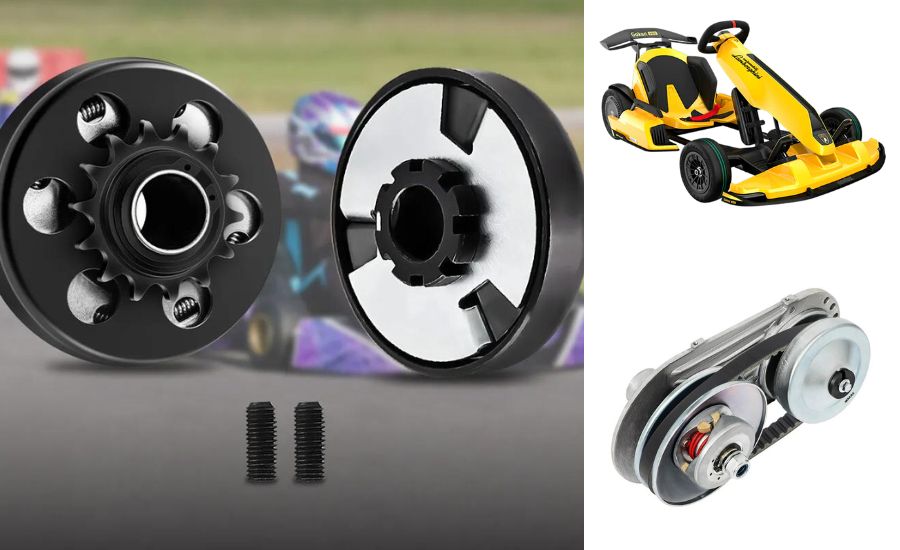
In the heart of every go-kart lies a small yet indispensable component – the go-kart clutch that engages and disengages power transmission between the engine and the wheels.
Main Types of Clutches Used in Go-Karts
Go-karts use various types of clutches, each with unique characteristics suited to different driving preferences and performance demands.
From traditional manual clutches to the more sophisticated torque converters used in automatic transmission, understanding the distinctions is crucial.
Torque converters, for instance, leverage a fluid coupling mechanism, providing seamless power transfer and eliminating the need for manual engagement, making them popular in entry-level karts.
The Role of the Clutch in Controlling Power Transmission
As the engine speed increases, the clutch operates, engaging with the output shaft and facilitating the seamless transfer of torque.
This process is pivotal in controlling the go-kart speed, ensuring a harmonious balance between acceleration and deceleration in the engine.
The ability of the clutch to manage power transmission is especially critical during higher RPM, preventing excessive heat generation and mitigating the adverse effects of excessive weight on the go-kart’s overall performance.

2. The Centrifugal Force
Centrifugal force is a byproduct of circular motion, acting outward from the center of rotation. In simpler terms, when an object rotates, centrifugal force pushes it away from the center of the rotation axis.
This fundamental principle finds profound application in the world of go-kart clutches, where the controlled harnessing of centrifugal force dictates the engagement and disengagement of the clutch system.
In go-karts equipped with a centrifugal clutch, the application of centrifugal force is instrumental in managing power transmission. As the speed increases operating at a higher RPM, centrifugal force comes into play.
This force influences the clutch mechanism, prompting it to engage and transfer power from the engine to the rear wheels.
This automatic engagement ensures a seamless and responsive driving experience, especially in scenarios where higher speeds are desired.
While centrifugal force facilitates the transfer of power, it also contributes to the heat generated, particularly during extended use or when the engine operates at higher RPM.
This heat can impact the efficiency of the clutch system and, in turn, the overall performance of the go-kart.
3. Centrifugal Clutch: A Deep Dive
With its ingenious design, the centrifugal clutch forms a cornerstone in the world of go-karting.
Explanation of Centrifugal Force and its Impact on the Clutch System
At the core of a centrifugal clutch lies the concept of centrifugal force.
When the engine RPM rises, centrifugal force takes center stage, causing the clutch to engage and link the electric motor or engine with the rear wheel.
This dynamic interaction is fundamental to the seamless transfer of power, defining the go-kart’s acceleration and engine speed characteristics.
Detailed Breakdown of Centrifugal Clutches and Their Design
A centrifugal clutch is a marvel of engineering simplicity. Comprising components like the snap ring, torque converter, and friction lining, its design is elegant yet effective.
The snap ring, for instance, plays a crucial role in maintaining the structural integrity of the clutch assembly, ensuring a secure connection between components.
The torque converter, a critical element in automatic transmissions, enhances the efficiency of power transfer, providing a smooth and responsive driving experience.
Meanwhile, the friction lining within the clutch facilitates the transfer of power to the wheels, highlighting the synergy of each element in the centrifugal clutch’s design.
Advantages and Disadvantages of Using Centrifugal Clutches in Go-Karts
Centrifugal clutches bring a set of distinct advantages and considerations to the table. The seamless engagement provided by centrifugal force is advantageous, offering a smooth transition of power without the need for manual intervention.
This characteristic makes them ideal for entry-level go-karts and recreational use, simplifying the driving experience.
However, it’s crucial to acknowledge that, like any system, centrifugal clutches have their limitations.
Heat generation can be a concern, particularly during prolonged use or under heavy loads. Additionally, the automatic engagement mechanism may not be suitable for advanced or competitive go-karting scenarios where precise control over power transmission is paramount.
Tips for Maintaining and Troubleshooting Kart Clutches
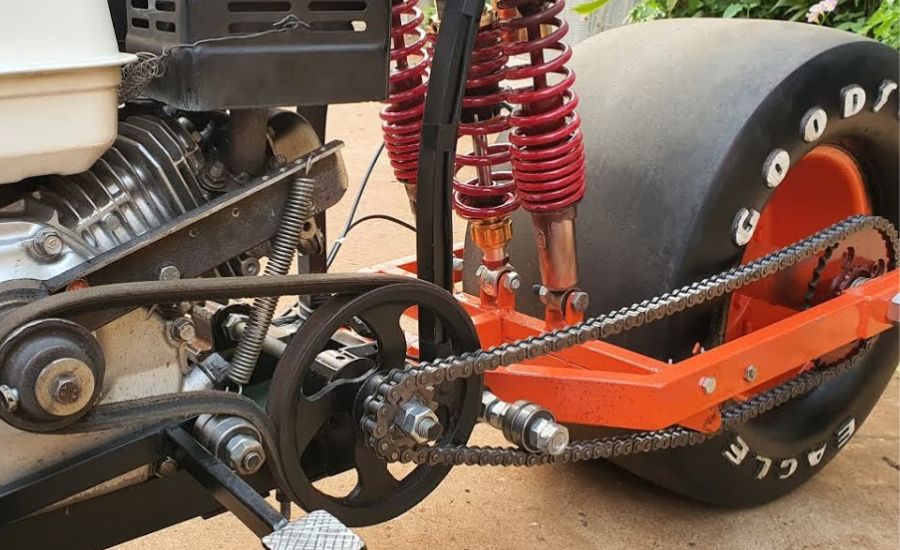
Maintaining your go-kart clutch is paramount to ensuring optimal performance on the track.
Regular Inspections. Periodically inspect the clutch components, including the snap ring, for signs of wear or damage. Catching issues early can prevent more extensive damage and prolong the life of your clutch.
Lubrication. Ensure proper lubrication of moving parts. Lubricating the snap ring and other components helps reduce friction, minimizing wear and tear.
Alignment Checks. Verify that the clutch components are properly aligned. Misalignment can lead to uneven wear and reduced efficiency. Adjust as needed to maintain optimal performance.
Heat Management. Implement measures to manage heat generated during operation. Adequate ventilation and, if necessary, additional cooling mechanisms can help mitigate this issue.
Common Issues and Troubleshooting Techniques for Go-Kart Clutches
Clutch Slipping: If you notice the slipping during acceleration, check for worn friction linings. Replacing or adjusting the friction lining can resolve this issue.
Engagement Problems: Difficulty engaging or disengaging the clutch may indicate a problem with the snap ring. Inspect the snap ring for damage or deformation and replace if necessary.
Unusual Noises: Unusual sounds during clutch operation could signal misalignment or worn components.
Conduct a thorough inspection and address any issues promptly.
Inconsistent Performance: If your go-kart experiences inconsistent performance, check for variations in speed and clutch engagement. Adjustments to the engine RPM or clutch settings may be necessary.
Expert Advice on Optimizing Clutch Performance for Different Racing Conditions
Adjusting for Automatic Transmissions. For go-karts with automatic transmissions, consider fine-tuning the clutch engagement points to match the specific characteristics of your transmission. This ensures seamless transitions during acceleration and deceleration.
Adapting to Varied Temperatures. Racing conditions can vary based on temperature. Adjust clutch settings to accommodate temperature changes, as extreme heat or cold can affect the performance.
Preventing Heat Damage. Implement cooling measures, such as adding cooling fins or ventilation.
FAQ
What does a clutch do in a go-kart?
A go-kart clutch transfers power between the engine and the wheels. When the engine is running, the clutch engages to connect the engine shaft with the driver pulley.
During idle or when the speed decreases, the clutch disengages, enabling the engine to run independently without affecting the motion of the go-kart.
Why is my go-kart clutch not engaging?
There could be several reasons why a go-kart clutch fails to engage.
If the idle speed is too high, the clutch may struggle to disengage, affecting the ability to come to a complete stop.
If the clutch is slipping, it might not fully engage, leading to performance issues. Check for signs of wear on the clutch components and adjust or replace them.
Verify that the engine RPM is within the recommended range for optimal clutch engagement.
Do you have to break in a go-kart clutch?
Yes, breaking in a go-kart clutch is essential for optimal performance. During the break-in period, the clutch components adapt to each other and the operating conditions. Follow these general steps:
• Gradual Acceleration. Avoid sudden acceleration during the first few runs. Gradually increase speed to allow the clutch components to adjust.
• Varied Speeds. Incorporate a mix of speeds during the break-in to ensure even wear on the clutch components.
ensure longevity.
• Periodic Inspections. Regularly inspect the clutch components for any signs of wear or issues during the break-in period.
Conclusion
How does a clutch work on a go-kart? A go-kart clutch stands as the bridge between the engine and the responsive wheels.
Its primary function is to manage power transmission, engaging and disengaging seamlessly to control acceleration, deceleration, and overall speed.
As the speed increases, the clutch responds by engaging, allowing the go-kart to move, and when the speed decreases, it disengages to facilitate a controlled stop.
This dynamic interaction is fundamental for the go-kart’s performance, providing the driver with the ability to precisely dictate the kart’s movements on the track.
Conversely, when the engine speed decreases, the clutch disengages to allow the engine to run independently.
In addition to traditional manual clutches, some go-karts embrace the simplicity of automatic transmission, making them ideal for beginners or those seeking a more straightforward driving experience.
